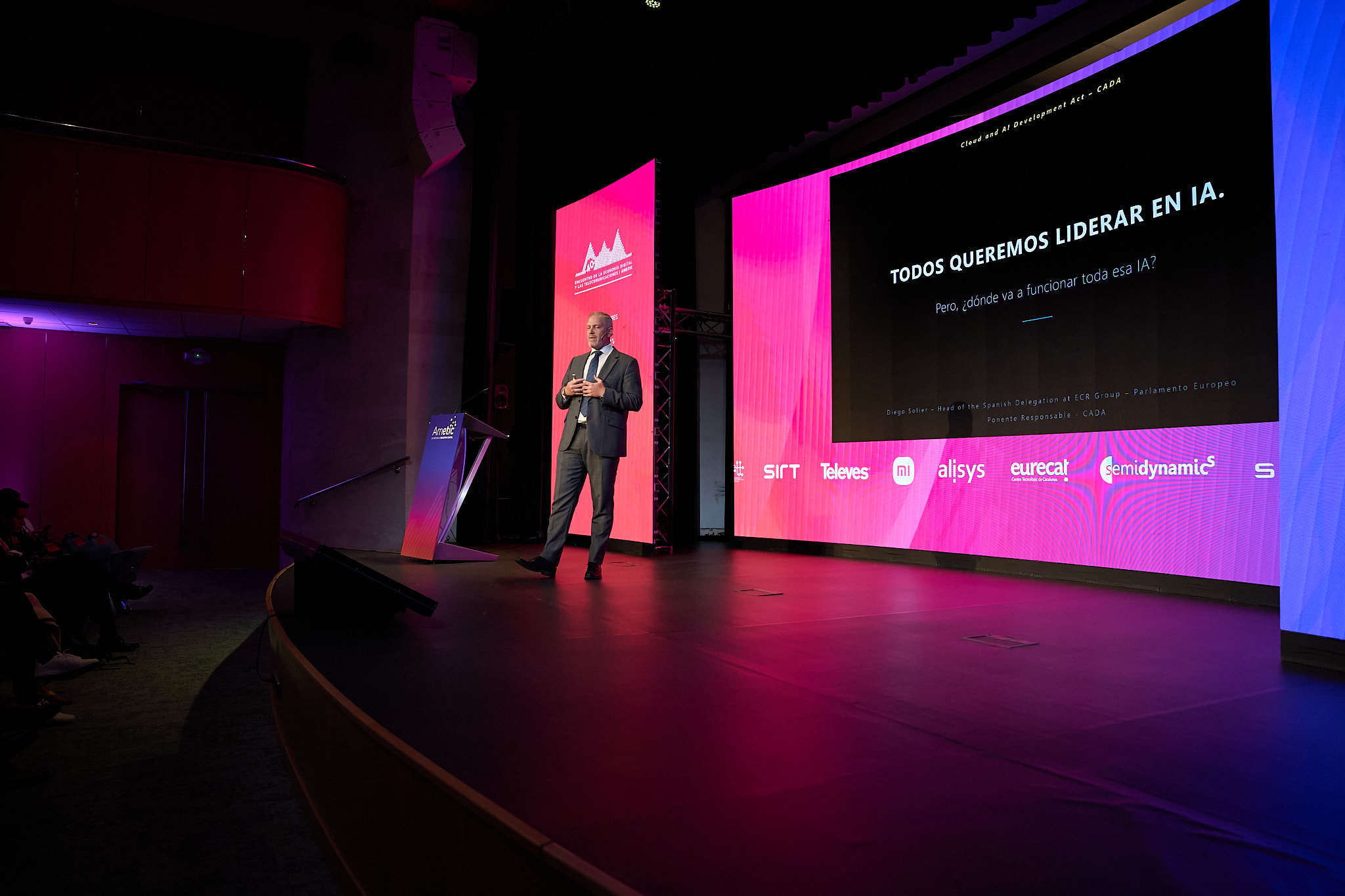
The concept of digital sovereignty appears recurrently in European strategic reports, from Draghi to Letta. However, there is a recurring temptation in the Union's corridors to confuse sovereignty with protectionist isolation. True sovereignty does not consist of raising walls or expelling the global technology providers that have led innovation; sovereignty is having the capacity to decide when it matters. In other words, being able to migrate critical data and workloads freely, without being trapped by forced dependencies.
The framework of the future Cloud and AI Development Act (CADA) is built on four indispensable operational pillars:
1. Attracting technological financing: Private capital moves to jurisdictions such as the United States or the United Kingdom when it perceives greater certainty and less bureaucratic friction. Europe needs to generate legal stability so that investing here is profitable and predictable.
2. Accelerated deployment: An investor cannot wait five or six years to connect a data center to the electricity grid or to clear administrative procedures. In an industry where hardware and model cycles change every few months, administrative slowness destroys projects before they are even built.
3. Criticality-based classification (open market vs. reinforced safeguards): Not all data require the same protection. The system must categorize services by objective risk levels. Most business applications must coexist in an open, interoperable and competitive market, reserving the strictest resilience and jurisdiction controls exclusively for essential infrastructure and state functions.
4. Realistic public demand: Public-sector procurement can act as a driver for the industry, but it does not create capacity out of nothing. Before imposing sovereign computing requirements on public administrations, it is essential that the physical infrastructure is built and operational.
Moreover, security and supplier assessments must be based on auditable, verifiable technical evidence, never on discretionary criteria such as country of origin. Legal certainty is the only path for industry to invest with confidence.