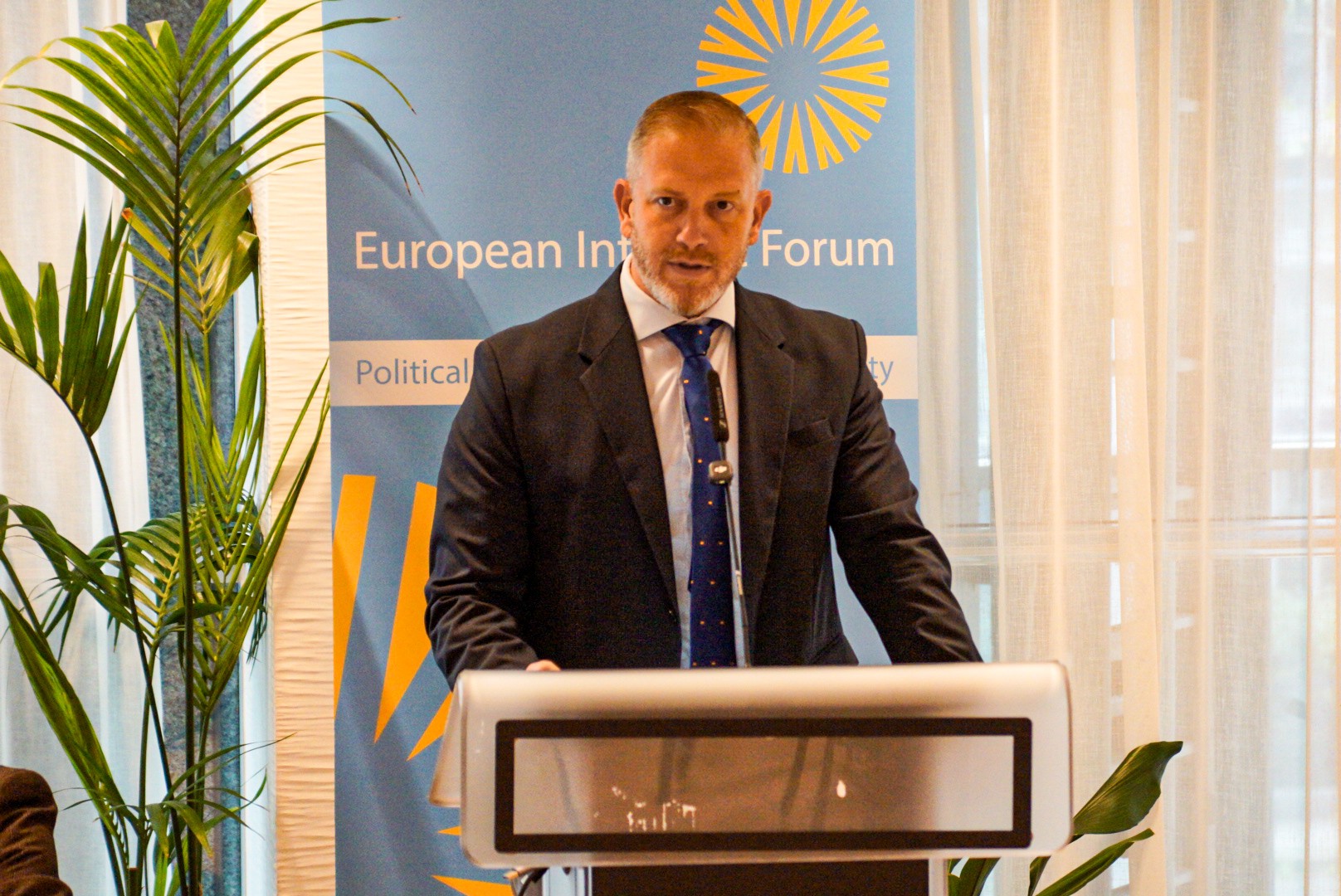
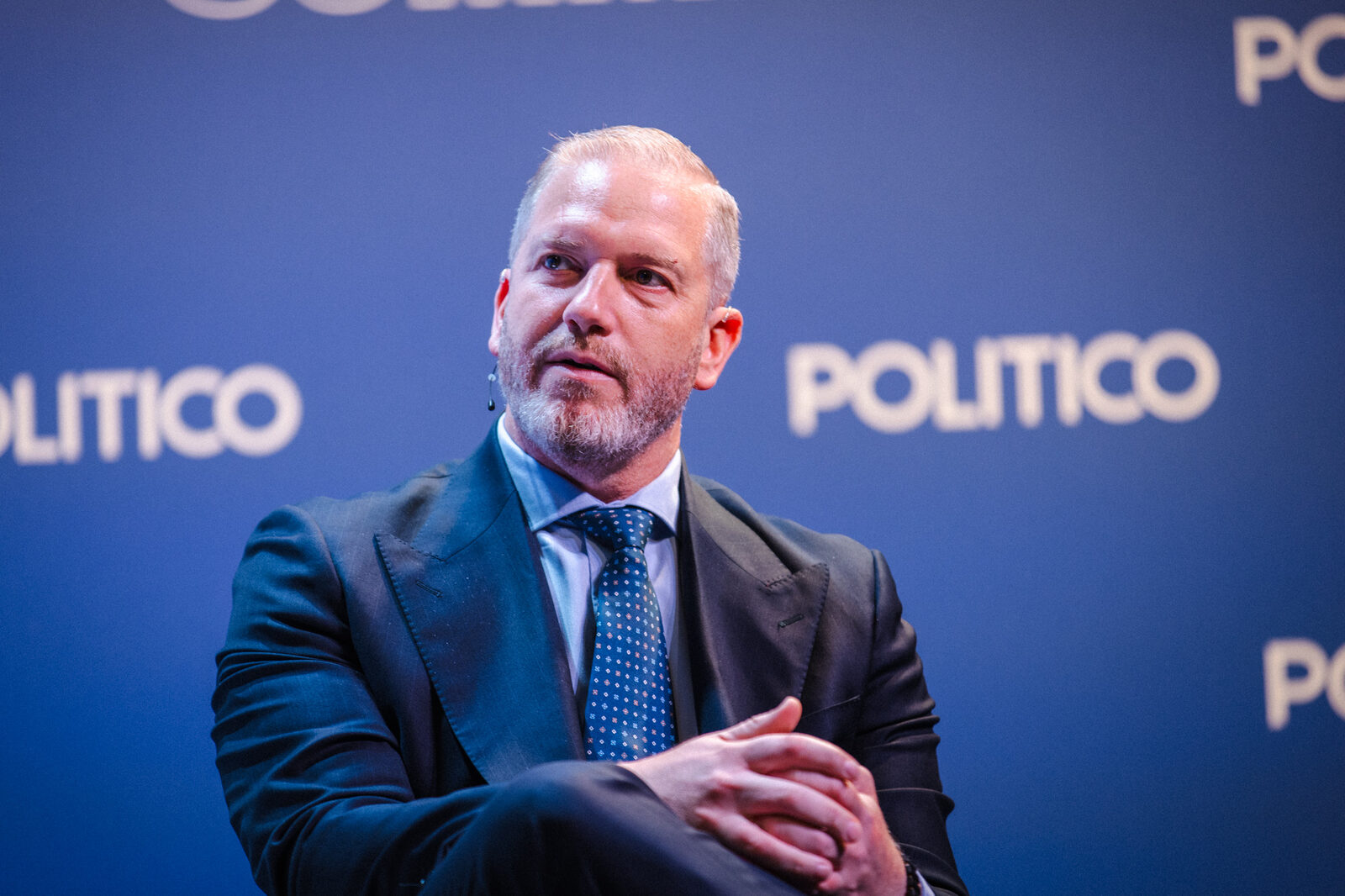
Today I had the privilege of co-chairing, together with my fellow MEP Brando Benifei, a lunch-debate organised by the European Internet Forum (EIF) at the European Parliament under the title "Building the Backbone of the AI Economy: Scaling Europe's High-Performance Infrastructure".
Brando has played a very significant role in shaping Europe's approach to artificial intelligence. And today we had the opportunity to address something equally decisive: the infrastructure that will make Europe's AI ambitions possible.
Because we can have the best strategies. We can have ambitious legislation. We can invest in research and innovation. But without the right infrastructure, none of this will be enough.
From ambition to execution
For many years, Europe has been very good at debating digital transformation. We have developed strategies, regulatory frameworks and rules. And many of them are necessary.
But today, the global competition in artificial intelligence is moving at enormous speed. The United States is investing massively in computing infrastructure. China is also expanding its technological capabilities. And Europe cannot afford to fall behind.
We cannot regulate our way to technological leadership. We also have to build it.
We need more computing capacity. More data centres. Better connectivity. And reliable access to energy. Because the AI economy does not exist only in software: it depends on physical infrastructure — buildings, electricity, networks, chips and computing power.
Without infrastructure, artificial intelligence remains an ambition, not an economic reality.
CADA: turning ambition into real capacity
As rapporteur of the Cloud and AI Development Act (CADA), I see this legislation as an opportunity to help Europe move from ambition to execution.
For me, CADA must not become yet another exercise in creating unnecessary bureaucracy. It must help remove barriers. It must accelerate investment. And it must create the conditions for Europe to develop the infrastructure it needs.
We must ask ourselves very practical questions: how do we make it easier to build data centres in Europe? How do we cut permitting timelines? How do we improve access to electricity? How do we attract more private investment? And how do we ensure that European companies can access the computing capacity they need?
A fast-track procedure that only exists on paper is not a fast-track procedure. If we want faster deployment, we need procedures that work in practice. We need coordination between European, national and local authorities. And we need predictability for investors. Because no company will invest billions in infrastructure if it cannot foresee when its project will become operational.
There is no AI strategy without an energy strategy
I want to insist on a point I consider especially relevant: energy.
Artificial intelligence requires enormous computing capacity. And computing requires electricity. This is a reality we cannot ignore.
We can announce new AI factories. We can promote new data centres. We can set ambitious targets. But if the electricity is not available, those projects will not materialise.
We cannot have an AI strategy without an energy strategy.
Europe needs to connect its digital ambitions with its energy infrastructure: improving grid connections, reducing unnecessary delays, investing in electricity networks and guaranteeing access to reliable and competitive energy.
Sustainability is essential. But we must approach it through innovation and technological progress: more efficient cooling systems, better energy management, waste-heat recovery and technologies that reduce the environmental impact of computing.
We need ambitious environmental targets, but also flexibility and technological neutrality.
Digital sovereignty: choice, not isolation
Another central theme of the debate was European technological sovereignty. It is an expression we hear constantly, but I believe we must be clear about what it means.
For me, technological sovereignty does not mean closing off the European market. It does not mean excluding international companies simply because they are not European. And it does not mean that every digital service must be provided by a European company.
Sovereignty is choice, control and resilience. It means that European companies and public administrations have real alternatives. It means avoiding excessive dependencies. It means the ability to protect critical data and services. And it means being able to act when our strategic interests are at risk.
We need European champions. But we also need international investment, competition and cooperation with trusted partners. The goal must not be to isolate Europe, but to make it stronger and more competitive.
Diego Solier, Reinier van Lanschot (IMCO co-rapporteur on CADA) and Vicente Domecq at the European Internet Forum debate
Resilience: the dimension we cannot ignore
There is an issue that deserves more attention: resilience. Recent reports about attacks affecting data centre infrastructure remind us that digital infrastructure can be exposed to physical threats.
I do not believe the solution is simply to build smaller data centres. Europe needs large-scale facilities to develop advanced artificial intelligence. But we also need geographical distribution, secure connectivity, reliable energy supplies and backup capacity.
The goal should not be smaller data centres, but fewer single points of failure.
We need more computing capacity, but we also need that capacity to be resilient. Because digital sovereignty is not only about where our infrastructure is located, but about whether our essential services keep working when something fails.
From public investment to private investment
Europe cannot build the infrastructure of the AI economy with public funds alone. European programmes can play an important role: supporting research, de-risking investment and developing strategic projects. But the scale of investment required is enormous, and most of it must come from the private sector.
Our responsibility as legislators is to create the right conditions: clear rules, faster procedures, access to energy, legal certainty and an attractive investment environment.
Public money should serve to unlock private investment, not to replace it.
We must also ensure that innovation turns into commercial success. Europe has excellent researchers, leading universities and innovative startups. But too often, European companies struggle to scale: they develop technology here and then grow elsewhere. We need to change that dynamic. And access to computing infrastructure is part of the solution.
Three messages for Europe
I closed with the three key ideas I conveyed to the speakers and attendees of the debate:
First: Europe needs to build. More computing capacity, more data centres, better digital infrastructure.
Second: Europe needs to remove barriers. Permitting, access to energy and investment conditions must be part of the solution, not the problem.
And third: Europe needs to build for the future. Our infrastructure must be competitive, sustainable and resilient.
As rapporteur for CADA, my aim is to contribute to a framework that makes these ambitions possible. Not through unnecessary restrictions, but through practical solutions.
That is why it was especially valuable today to count on representatives from the European Commission and from industry: Kilian Gross (DG CNECT), Carmen Lembo (Qualcomm), Sophie Thibault (Lenovo) and Dr Jakob Greiner (Deutsche Telekom).
We need this dialogue. Because good legislation cannot be drafted without understanding the reality of those who build, invest in and operate our digital infrastructure.
Europe cannot regulate its way to technological sovereignty. It has to build it.