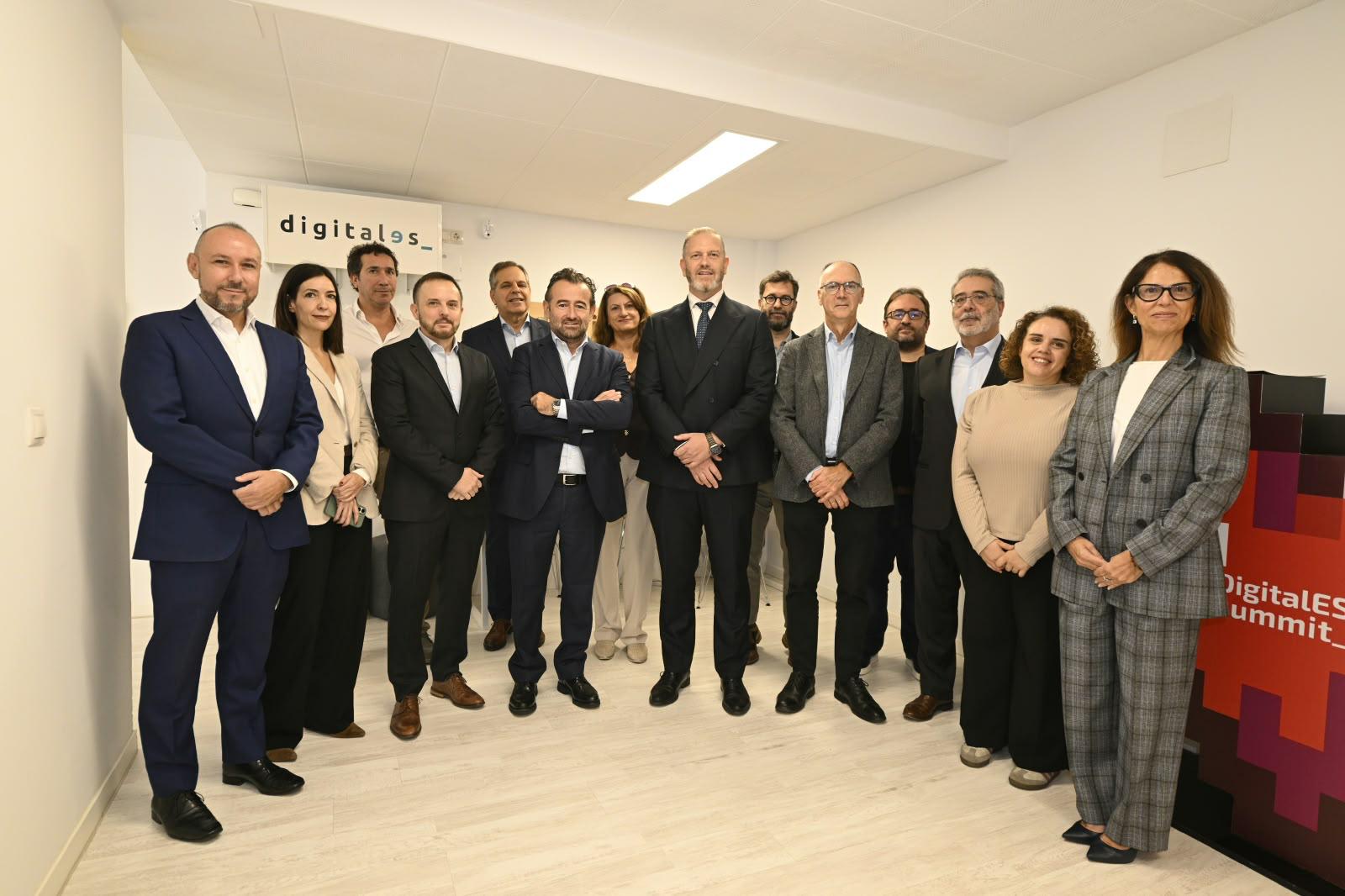
Europe cannot aspire to lead the technological revolution if it does not create the conditions to compete. This is the conviction with which I took part, on 23 October in Madrid, in the breakfast organised by DigitalES with its member companies: a meeting point between the European Parliament and the Spanish technology sector at a decisive moment for our digital agenda.
I want to thank DigitalES and its director general, Miguel Sánchez Galindo, for the invitation and the opportunity to hold this dialogue. Listening to those who develop technology, invest and create jobs is an essential part of our work as legislators. If we want European rules to work, we must keep in mind the reality of those who will have to apply them.
Three files and a single question
The meeting placed at its centre three legislative initiatives I am working on: the Cloud and AI Development Act (CADA), for which I am the lead rapporteur, and the revision of the Cybersecurity Act (CSA2) and the Digital Omnibus, in which I take part as shadow rapporteur.
They are different files, but connected by a single question: are we building a Europe that facilitates technological development or a Europe that simply accumulates regulation?
My position is clear. We need a framework that protects, builds trust and offers legal certainty. But we also need that framework to allow investment, the deployment of infrastructure, innovation and growth. The quality of our legislation should not be measured by the number of obligations it introduces, but by its ability to address problems without creating unnecessary obstacles.
Diego Solier in conversation with the technology sector during the working breakfast hosted by DigitalES in Madrid
CADA: turning ambition into technological capacity
As lead rapporteur for CADA, my priority is to help Europe have the conditions it needs to develop its cloud and artificial intelligence capacity.
Expressing the will to lead is not enough. That ambition needs investment, computing capacity, digital infrastructure and competitive energy. It also needs legal certainty and a genuine digital single market that allows companies to grow in Europe.
Artificial intelligence is not developed through rules alone. It needs a material base on which to build: data centres, networks and energy supply, as well as the talent and investment that make its development possible.
That is why the debate on CADA must focus on how to facilitate those capacities. Our task is to make investing and developing technology in Europe a viable and competitive option.
Cybersecurity: protecting without blocking innovation
Security is an indispensable condition for digital transformation. Companies, public administrations and citizens need to be able to trust the infrastructure and services they use.
The revision of the Cybersecurity Act must help us strengthen that trust and Europe's resilience. My approach is for it to do so with clear and proportionate requirements, without introducing unnecessary barriers to innovation.
It is not about choosing between security and competitiveness. It is about building a framework in which both reinforce each other.
Simplifying so that companies can grow
The Digital Omnibus raises another fundamental question: how to simplify our regulatory framework so that European companies can devote more resources to innovating, investing and competing globally.
Simplifying does not mean giving up safeguards. It means that obligations are understandable, coherent and proportionate. It means preventing regulatory complexity from becoming a brake on those who want to develop new products and services.
If we want a genuine digital single market, we must work so that companies can take advantage of it in practice.
Technological sovereignty is built
Technological sovereignty is not achieved solely by raising barriers. It is built by developing our own capabilities and creating the conditions to compete.
That is the approach I defend in the European Parliament and that guides my work on these files: more investment, more technological capacity, competitive energy and rules that provide certainty.
Meetings like the one organised by DigitalES make it possible to keep open a necessary dialogue between the institutions and the sector. Legislating requires listening, contrasting perspectives and understanding the practical consequences of our decisions.
Europe has to decide whether it wants to limit itself to regulating the technological revolution or also create the conditions to lead it. My commitment is to work for the latter.
Because Europe's technological future is not awaited. It is built.
#CADA#AI#Technological Sovereignty#Competitiveness#Cloud Computing#Cybersecurity#DigitalES#Digital Omnibus