Europe has a decision ahead of it: to keep depending on technologies developed beyond our borders, or to create the conditions for our companies to innovate, invest and compete on a global scale.
Today, together with my colleague Reinier van Lanschot, I presented our joint draft on the Cloud and AI Development Act (CADA). We come from different political families and do not always share the same priorities, but we agree on one fundamental conviction: Europe needs to develop the technological capabilities that will shape its economy, its security and its future.
For too long we have been good at regulating technology, but less effective at developing it. We have researchers, innovative companies, a solid industrial base and a large single market. Yet we still depend heavily on a small number of external providers in areas such as cloud, artificial intelligence and computing capacity.
For me, technological sovereignty is not about closing Europe off from the world. It is about having the capacity to act, to compete and to choose. And that capacity requires moving from words to infrastructure, investment and concrete solutions.
Diego Solier and Reinier van Lanschot, co-rapporteurs of CADA, during the presentation of the draft at the European Parliament
Europe needs to build
We will not be able to lead the development of artificial intelligence without the infrastructure needed to deploy it. We need more computing capacity, more data centres, reliable access to energy and, above all, investment.
Our draft seeks to facilitate that roll-out through acceleration zones and simpler, more predictable procedures. We must tackle obstacles that have held back projects in Europe for years, such as lengthy authorisation processes, administrative fragmentation and uncertainty over access to electricity grids.
But building faster does not mean turning our backs on citizens or giving up on environmental requirements. As Reinier explained during the presentation, we propose that local communities be involved before acceleration zones are selected, and that they receive direct benefits from the infrastructure they host. These could include, for example, the reuse of generated heat or investment in public infrastructure.
Social acceptance, sustainability and regulatory predictability are necessary conditions for attracting lasting investment. We must also give European companies, including smaller operators, a real opportunity to take part in this expansion, while remaining open to international investment.
Sovereignty based on risk, not on bureaucracy
Another priority of our work is to prevent Europe from ending up with 27 different interpretations of what a sovereign cloud service means. That fragmentation would increase costs and uncertainty, precisely when we need a stronger single market.
That is why we advocate a common, risk-based framework. Not all activities require the same level of protection: an ordinary administrative service does not pose the same risks as a particularly sensitive government function or a piece of critical infrastructure.
We have worked to bring greater clarity to the different levels of assurance, with one aim: to firmly protect what truly needs it, without imposing the highest requirements on everyone.
As Reinier pointed out, it is also important for sovereign cloud certification to have a consistent meaning across Europe. To that end we propose common rules and accredited auditors, preventing differences between countries from making it possible to shop for the easiest label to obtain.
We also know that many essential services —in areas such as energy, healthcare or transport— are run by private companies. Their importance does not depend on who owns them. But any additional obligation must focus on genuinely critical activities, be proportionate and be coordinated with existing cybersecurity rules. We will not strengthen European competitiveness by duplicating requirements or adding unnecessary administrative burdens.
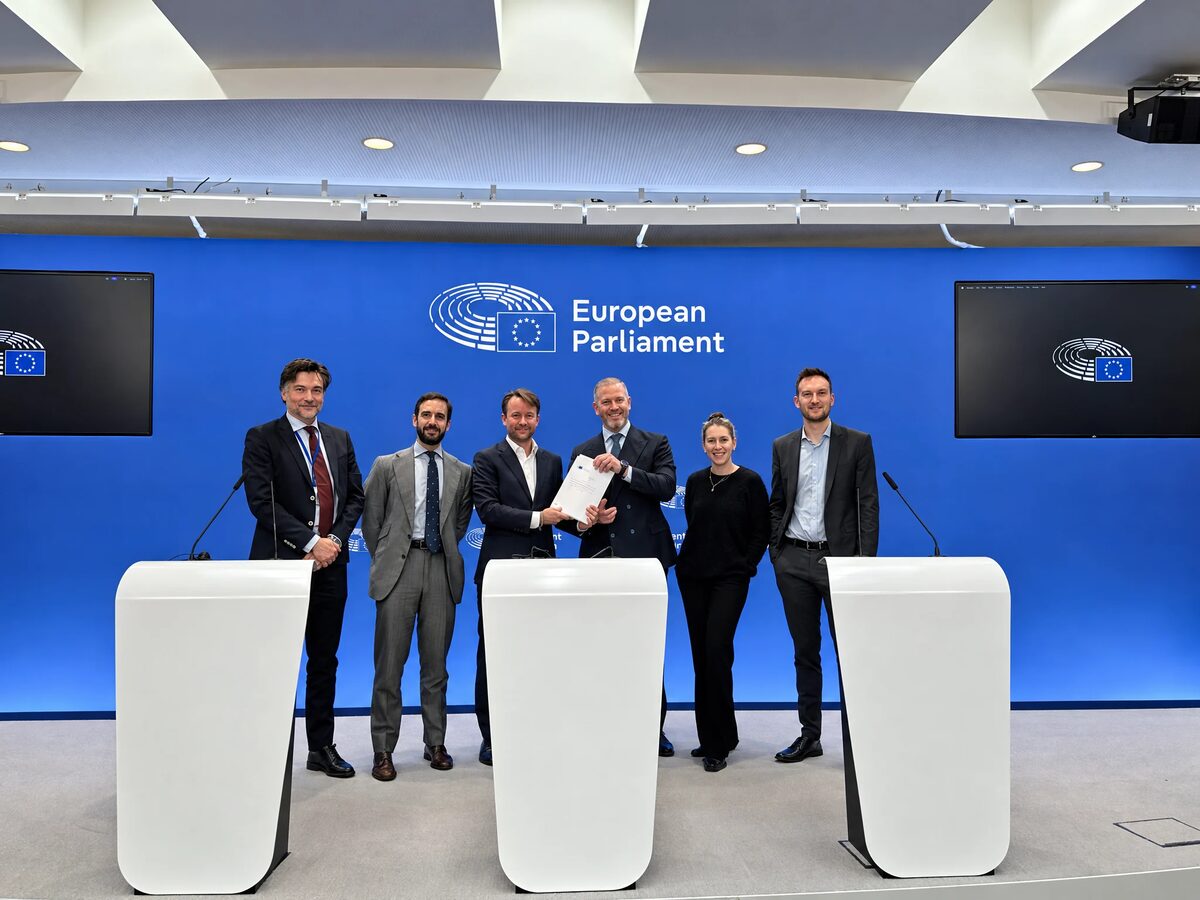
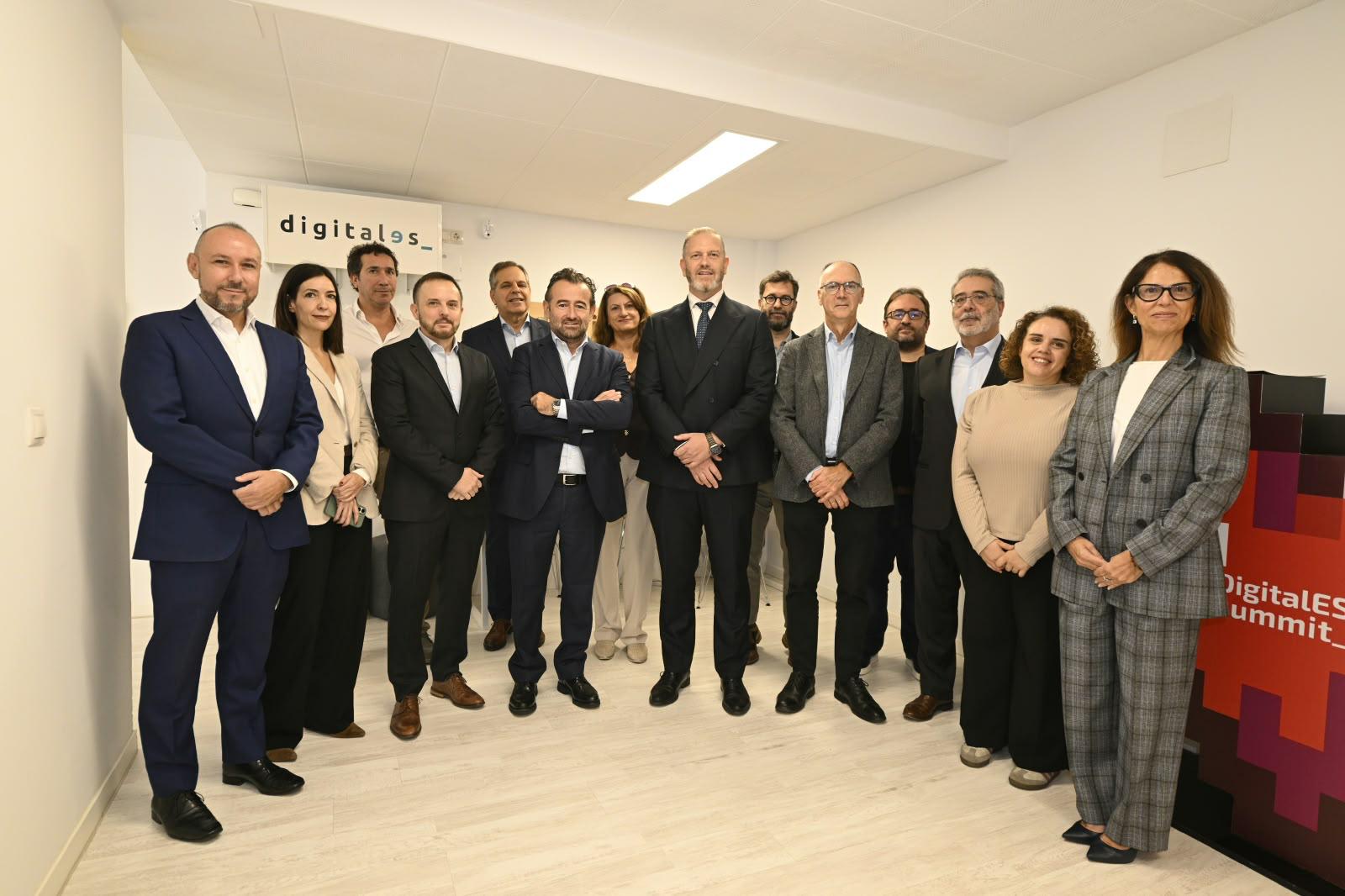
The co-rapporteurs' team with the joint CADA draft presented at the European Parliament
Turning European demand into technological capacity
Europe has companies capable of innovating. One of their great challenges is reaching the scale needed to compete internationally, and here public procurement can play an important role.
Public administrations are major buyers of digital services. Their decisions can help create a more predictable market, in which European providers can invest, develop their technologies and grow. During the presentation, Reinier stressed the need to trust our companies and to use public demand to strengthen the European ecosystem, especially in the most sensitive services.
At the same time, we must be realistic: administrations need reliable services, competitive solutions and a good use of public resources. That is why our approach combines sovereignty requirements with proportionate safeguards and specific flexibility where suitable solutions do not exist.
Sovereignty and international cooperation
Defending our capacity to decide does not mean giving up on cooperation. Europe benefits from international technology, knowledge and investment, and must continue to work with trusted partners.
The key lies in distinguishing between activities and levels of sensitivity. Our approach provides a pathway for trusted partners with clearly defined guarantees, while reserving the highest level for European control of the most sensitive activities.
I believe that sovereignty and competitiveness are not opposing goals: they should reinforce each other. The same is true of technological ambition and the practical application of the rules.
The text that Reinier and I have presented is a shared starting point, the result of constructive work between two political groups with different perspectives. What lies ahead now is the legislative process and dialogue with our colleagues in the Parliament, the Commission, the Council and the sector.
There is a great deal of work still to do, but I am convinced we have taken an important step. Europe must not limit itself to regulating its digital future: it must also have the capacity to build it.